The food industry relies heavily on ingredients that can enhance flavor, texture, and shelf life. One such ingredient that has gained popularity is dehydrated onion, known for its versatility and convenience.
Dehydrated onion products are used in a variety of dishes, from soups and sauces to seasonings and spice blends. They offer a consistent flavor profile and are easy to store and transport, making them ideal for restaurants, manufacturers, and exporters.
The use of dehydrated onions simplifies meal preparation and reduces kitchen waste, contributing to more efficient operations in the food industry.
Key Takeaways
- Dehydrated onions enhance flavor and texture in various dishes.
- They offer convenience and consistency for food businesses.
- Ideal for restaurants, manufacturers, and exporters due to their long shelf life.
- Simplifies meal preparation and reduces kitchen waste.
- Contributes to efficient operations in the food industry.
The Value of Premium Dehydrated Onions in Commercial Applications
The demand for premium dehydrated onions has seen a significant surge in commercial applications, driven by the growing need for consistent flavor and extended shelf life. This trend is largely influenced by the expanding food processing industry and the increasing reliance on dehydrated ingredients to enhance culinary products.
Current Market Demand and Growth Projections
The market for dehydrated onion products is experiencing robust growth, driven by the rising demand from restaurants, manufacturers, and exporters. According to industry reports, the global dehydrated onion market is projected to grow at a CAGR of 4.5% over the next five years.
| Year | Market Size (USD Million) | Growth Rate (%) |
|---|---|---|
| 2023 | 450 | 3.2 |
| 2024 | 470 | 4.4 |
| 2025 | 500 | 6.4 |
This growth is attributed to the increasing use of dehydrated onions in various food products, including soups, sauces, and seasonings.
Why Quality Matters in Dehydrated Ingredients
Quality is paramount in dehydrated ingredients as it directly impacts the flavor, texture, and overall quality of the final product. Premium dehydrated onions are made from high-quality raw materials and processed using advanced technologies to retain their natural flavor and aroma.
Using high-quality dehydrated onions ensures consistency in taste and performance, which is crucial for commercial food producers. It also enhances the shelf life of products, reducing waste and improving profitability.
Understanding Dehydrated Onion Production and Processing
Dehydrated onion production is a complex process that requires careful selection of raw materials and advanced dehydration technologies. This process is crucial in producing high-quality dehydrated onions that meet the demands of various industries, including restaurants, manufacturers, and exporters.
Selection and Preparation of Raw Materials
The quality of dehydrated onions starts with the selection of fresh onions. High-quality raw materials are essential for producing superior dehydrated products. Onions are sorted based on size, color, and quality to ensure only the best are used. The selected onions are then cleaned, peeled, and chopped into the desired form before undergoing dehydration.
Advanced Dehydration Technologies
Dehydration is a critical step in the production of dehydrated onions. Various technologies are employed to remove moisture while preserving flavor, color, and nutritional value.
Air Drying Methods
Air drying is a traditional method where onions are dried using hot air. This method is cost-effective and widely used in the industry.
Freeze Drying Processes
Freeze drying involves freezing the onions and then removing the moisture using a vacuum. This method preserves the onions’ flavor and nutrients.
Spray Drying Techniques
Spray drying is used to produce dehydrated onion powder. Onions are pureed and then sprayed into a hot air chamber, instantly drying the particles.
Quality Assurance Throughout Production
To ensure the final product meets high standards, quality assurance is implemented at every stage of production. From the selection of raw materials to the final packaging, strict quality control measures are in place to guarantee consistency and quality.
Types and Forms of Dehydrated Onion Products
The versatility of dehydrated onions is reflected in their multiple product forms, which cater to various culinary and industrial applications. Dehydrated onions are not just a single product; they come in a range of types and forms, each with its unique characteristics and uses.
Dehydrated Onion Flakes
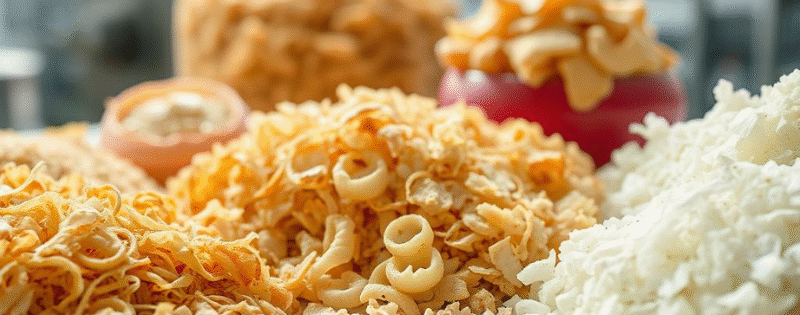
Dehydrated onion flakes are a popular form of dehydrated onion, known for their convenience and long shelf life. They are made by dehydrating onion slices until they reach the desired moisture level. These flakes can be easily rehydrated when needed, making them a staple in many kitchens. The texture and flavor of dehydrated onion flakes are preserved through careful processing, ensuring they add a punch of onion flavor to dishes.
Dehydrated Onion Powder
Dehydrated onion powder is another widely used form, created by grinding dehydrated onions into a fine powder. This form is particularly useful in applications where a smooth texture is required, such as in sauces and seasonings. The fine texture of onion powder allows for even distribution of flavor, making it a preferred choice for many chefs and manufacturers.
Dehydrated Onion Granules
Dehydrated onion granules fall between flakes and powder in terms of texture. They are larger than powder but smaller than flakes, offering a convenient middle ground. Granules are easy to measure and mix into recipes, providing a consistent onion flavor. Their versatility makes them suitable for a wide range of culinary applications, from soups to baked goods.
Specialized and Custom Onion Products
Beyond the standard forms, manufacturers often offer specialized and custom dehydrated onion products tailored to specific needs. These can include products with unique flavor profiles or textures, designed to meet the requirements of particular recipes or production processes.
“Custom dehydrated onion products allow businesses to differentiate their offerings and cater to niche markets,”
highlighting the flexibility and innovation possible in dehydrated onion production.
Key Benefits of Dehydrated Onions for Commercial Users
Dehydrated onions offer numerous advantages for commercial users, making them an essential ingredient in many food service and manufacturing operations. These benefits range from practical advantages like extended shelf life to performance enhancements such as consistency in flavor.
Extended Shelf Life and Storage Efficiency
One of the primary benefits of dehydrated onions is their extended shelf life. Unlike fresh onions, dehydrated onions can be stored for long periods without refrigeration, significantly reducing storage costs and minimizing waste. This makes them an ideal choice for commercial kitchens and food processing facilities.
Storage Efficiency: Dehydrated onions take up less space compared to fresh onions, allowing for more efficient storage and handling.
Consistency in Flavor and Performance
Dehydrated onions provide a consistent flavor profile that is crucial for maintaining product quality in commercial food applications. This consistency is particularly valuable in large-scale food manufacturing where variations in flavor can impact the final product.
- Uniform flavor in every batch
- Predictable performance in recipes
- Reduced risk of flavor-related quality control issues
Operational Advantages and Labor Savings
Using dehydrated onions can significantly reduce labor costs in commercial kitchens. They eliminate the need for peeling, chopping, and sautéing fresh onions, saving time and reducing kitchen waste.
Labor Savings: By simplifying the preparation process, dehydrated onions enable kitchen staff to focus on other tasks, improving overall operational efficiency.
Cost-Effectiveness for Volume Purchasers
Dehydrated onions are particularly cost-effective for businesses that use large quantities of onions. They offer a more affordable alternative to fresh onions, especially during peak seasons when fresh onion prices may be higher.
| Benefit | Description | Impact |
|---|---|---|
| Extended Shelf Life | Long-term storage without refrigeration | Reduced storage costs and waste |
| Consistent Flavor | Uniform flavor profile | Improved product quality |
| Labor Savings | Simplified preparation process | Increased operational efficiency |
| Cost-Effectiveness | Affordable alternative to fresh onions | Lower ingredient costs |

Restaurant Applications: Maximizing Dehydrated Onions in Food Service
Dehydrated onions offer a convenient and flavorful solution for restaurants looking to streamline their kitchen processes. By incorporating dehydrated onions into their menu offerings, restaurants can enhance the taste and consistency of their dishes while reducing preparation time.
Culinary Applications in Commercial Kitchens
Dehydrated onions are versatile ingredients that can be used in a variety of culinary applications. They add depth and complexity to dishes without the need for extensive preparation.
Soups and Sauces
Dehydrated onions can be easily rehydrated and added to soups and sauces, enhancing their flavor profile. This is particularly useful in commercial kitchens where consistency and speed are crucial.
Seasonings and Spice Blends
Dehydrated onions can be ground into powders or flakes and used in seasoning blends, adding a savory element to various dishes. This application is beneficial for restaurants looking to create signature flavors.
Ready-to-Use Preparations
Dehydrated onions can be used in ready-to-use preparations such as pre-made seasoning mixes or marinades, simplifying the cooking process and ensuring consistency across dishes.
Menu Development Strategies
When developing new menu items, chefs can leverage dehydrated onions to create innovative and flavorful dishes. By incorporating dehydrated onions into recipes, restaurants can offer unique and appealing options to their customers.
Storage and Handling Best Practices
To maximize the shelf life and quality of dehydrated onions, proper storage and handling practices are essential. Restaurants should store dehydrated onions in a cool, dry place, away from direct sunlight and moisture.
By following these guidelines, restaurants can effectively utilize dehydrated onions in their culinary operations, enhancing both the flavor and efficiency of their kitchen processes.
Manufacturing Applications: Integrating Dehydrated Onions in Food Production
Dehydrated onions play a crucial role in food manufacturing, offering a consistent flavor profile and extended shelf life. The integration of dehydrated onions into food production processes can significantly enhance the quality and consistency of final products.

Formulation Considerations for Processed Foods
When formulating processed foods, manufacturers must consider several key factors, including flavor profile, texture, and shelf life. Dehydrated onions can be a valuable ingredient in achieving these goals. They can be easily reconstituted to meet specific recipe requirements, allowing for flexibility in formulation.
Key benefits of using dehydrated onions in formulation include their ability to provide a consistent onion flavor, reduce product moisture content, and enhance overall product stability.
Scaling Production with Dehydrated Ingredients
Scaling production with dehydrated ingredients like dehydrated onions can be highly efficient. These ingredients are typically easier to store and transport than fresh onions, reducing logistical challenges and costs associated with large-scale production.
- Simplified inventory management
- Reduced storage space requirements
- Ease of scaling recipes up or down
Technical Specifications and Quality Control
To ensure the quality of dehydrated onions, manufacturers must adhere to strict technical specifications and quality control measures. This includes monitoring factors such as moisture content, particle size distribution, and microbial contamination.
Regular quality checks are essential to maintaining product integrity and ensuring compliance with food safety regulations. By implementing robust quality control processes, manufacturers can guarantee the consistency and reliability of their dehydrated onion products.
Export Considerations for Dehydrated Onion Products
Dehydrated onion products are in high demand worldwide, but exporting them involves navigating complex quality and regulatory requirements. As businesses look to expand their market reach through exports, understanding these considerations is crucial for success.
International Quality Standards and Compliance
Exporting dehydrated onions requires compliance with international quality standards. This includes adhering to regulations set by bodies such as the Codex Alimentarius Commission and ensuring products meet the importing country’s food safety standards.
Key compliance areas include:
- Microbial contamination limits
- Maximum residue levels for pesticides
- Labeling requirements
Packaging and Shipping Requirements
Proper packaging and shipping are critical to maintaining the quality of dehydrated onion products during export. This involves using appropriate packaging materials that protect against moisture and contamination.
| Packaging Material | Characteristics | Use Case |
|---|---|---|
| Multi-layer bags | Moisture barrier, puncture resistant | Bulk shipping |
| Aluminum foil bags | High barrier to moisture and light | Premium or sensitive products |
Documentation and Regulatory Considerations
Exporting dehydrated onions involves extensive documentation, including phytosanitary certificates, export licenses, and compliance certificates. Ensuring all documentation is accurate and complete is vital for smooth customs clearance.
“The complexity of export documentation cannot be overstated. Ensuring compliance with all regulatory requirements is key to avoiding costly delays or rejections.”
By understanding and adhering to these export considerations, businesses can successfully expand their reach into global markets with dehydrated onion products.
Quality Standards and Certifications for Premium Dehydrated Onion Suppliers
Ensuring the highest quality of dehydrated onion products requires adherence to rigorous standards and obtaining necessary certifications. Premium dehydrated onion suppliers must prioritize quality to establish trust with their clients and maintain a competitive edge in the market.
Food Safety Certifications (HACCP, ISO, FDA)
Food safety certifications are crucial for dehydrated onion suppliers. HACCP (Hazard Analysis and Critical Control Points) is a systematic approach to identifying and controlling hazards in the food production process. ISO (International Organization for Standardization) certifications, such as ISO 22000, further demonstrate a supplier’s commitment to food safety management. Compliance with FDA (Food and Drug Administration) regulations is also essential, ensuring that products meet U.S. safety standards.
Organic, Kosher, and Non-GMO Certifications
Beyond food safety, other certifications can enhance a product’s marketability. Organic certification appeals to consumers seeking products produced without synthetic chemicals. Kosher certification ensures that products comply with dietary laws, broadening their appeal. Non-GMO certification addresses consumer concerns about genetically modified organisms, providing an additional layer of trust.
Quality Testing Parameters and Methods
Regular quality testing is vital to maintaining high standards. Suppliers should implement rigorous testing parameters, including microbial analysis, moisture content assessment, and flavor profile evaluation. As one expert notes, “Quality testing is not just about compliance; it’s about ensuring the product meets the required standards for safety and performance.” Advanced testing methods, such as spectrophotometry, can provide detailed insights into product quality.
By adhering to these quality standards and obtaining relevant certifications, premium dehydrated onion suppliers can differentiate themselves and build strong relationships with their clients.
Conclusion: Partnering with the Right Dehydrated Onion Supplier
Partnering with a reliable dehydrated onion supplier is crucial for businesses seeking high-quality products. A strong partnership ensures a consistent supply of premium dehydrated onions, enabling restaurants, manufacturers, and exporters to maintain their standards.
When selecting a dehydrated onion supplier, consider their commitment to quality products, adherence to international standards, and ability to meet your specific needs. A trustworthy supplier will provide products that enhance your culinary creations and contribute to your business’s success.
By choosing the right dehydrated onion supplier, you can establish a long-term partnership that benefits your business. Focus on suppliers that prioritize quality, customer satisfaction, and innovative products to ensure a successful collaboration.
FAQ
What are the benefits of using dehydrated onions in commercial kitchens?
Dehydrated onions offer several benefits, including extended shelf life, consistency in flavor and performance, operational advantages, and cost-effectiveness for volume purchasers.
How are dehydrated onions produced and processed?
Dehydrated onions are produced through advanced dehydration technologies, including air drying, freeze drying, and spray drying methods, ensuring high-quality products.
What types of dehydrated onion products are available?
Dehydrated onion products come in various forms, including flakes, powder, granules, and specialized or custom products, catering to different culinary applications.
What quality standards should dehydrated onion suppliers adhere to?
Premium dehydrated onion suppliers should comply with food safety certifications like HACCP, ISO, and FDA, as well as other relevant certifications such as organic, kosher, and non-GMO.
How can dehydrated onions be used in restaurant applications?
Dehydrated onions can be used in various culinary preparations, including soups, sauces, seasonings, and spice blends, and can be incorporated into menu development strategies.
What are the key considerations for exporting dehydrated onion products?
Exporters should comply with international quality standards, packaging and shipping requirements, and regulatory documentation to ensure smooth exports.
How can manufacturers integrate dehydrated onions into their food production?
Manufacturers can formulate products using dehydrated onions, scale production, and ensure technical specifications and quality control to meet required standards.
What are the advantages of using dehydrated onions in food manufacturing?
Dehydrated onions provide consistency, convenience, and cost-effectiveness, making them an ideal ingredient for food manufacturers.